 Primate Tours
Duration
1 Day
Group Size
1-8 People
Difficulty
Moderate
Location
Volcanoes National Park
About This Tour
Gorilla trekking is the reason most people come to Rwanda in the first place: a guided hike into the Virunga volcano forests to spend one hour, at close range, with a wild mountain gorilla family. It's consistently ranked among the world's most remarkable wildlife encounters, and it's run under some of the strictest, best-funded conservation protocols of any wildlife tourism on Earth. This page covers everything — real pricing, what the day actually looks like, how fit you need to be, and how the permit system works — so you can book with accurate expectations, not a brochure version.
Choose Your Trek Style
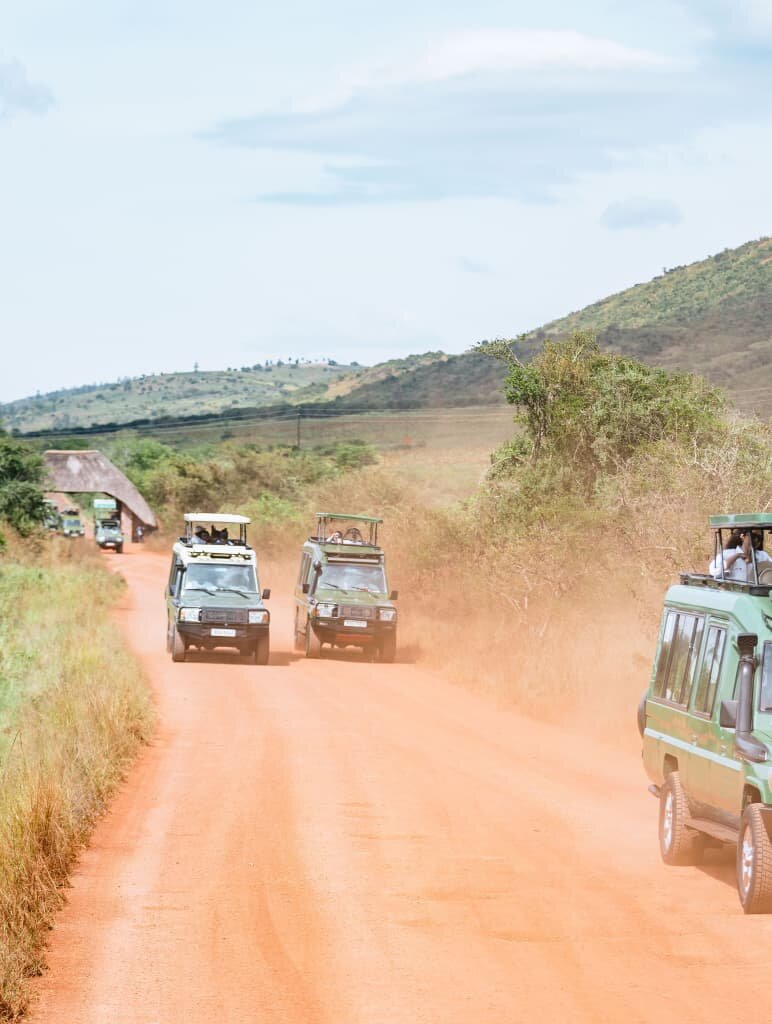
The $1,500 RDB gorilla permit is identical no matter who books it for you — it's a fixed government conservation fee, not something any operator controls. What actually changes your price is the vehicle and how private your day is:
Shared Safari Vehicle
$1,700 / person
Coordinated shared vehicle with other trekkers heading to the same park. Permit and lunch included.
Private — Toyota RAV4
$1,850 / person
Fully private — your group only, no strangers assigned to your vehicle. Permit and lunch included.
Fully Private — Land Cruiser V8
$2,000 / person
The most comfortable ride on rough park-access roads, fully private. Permit and lunch included.
The gorilla encounter itself is identical across all three: the same RDB briefing at Kinigi, the same trackers, the same one hour with the family you're assigned.
The Habituated Gorilla Families of Volcanoes National Park
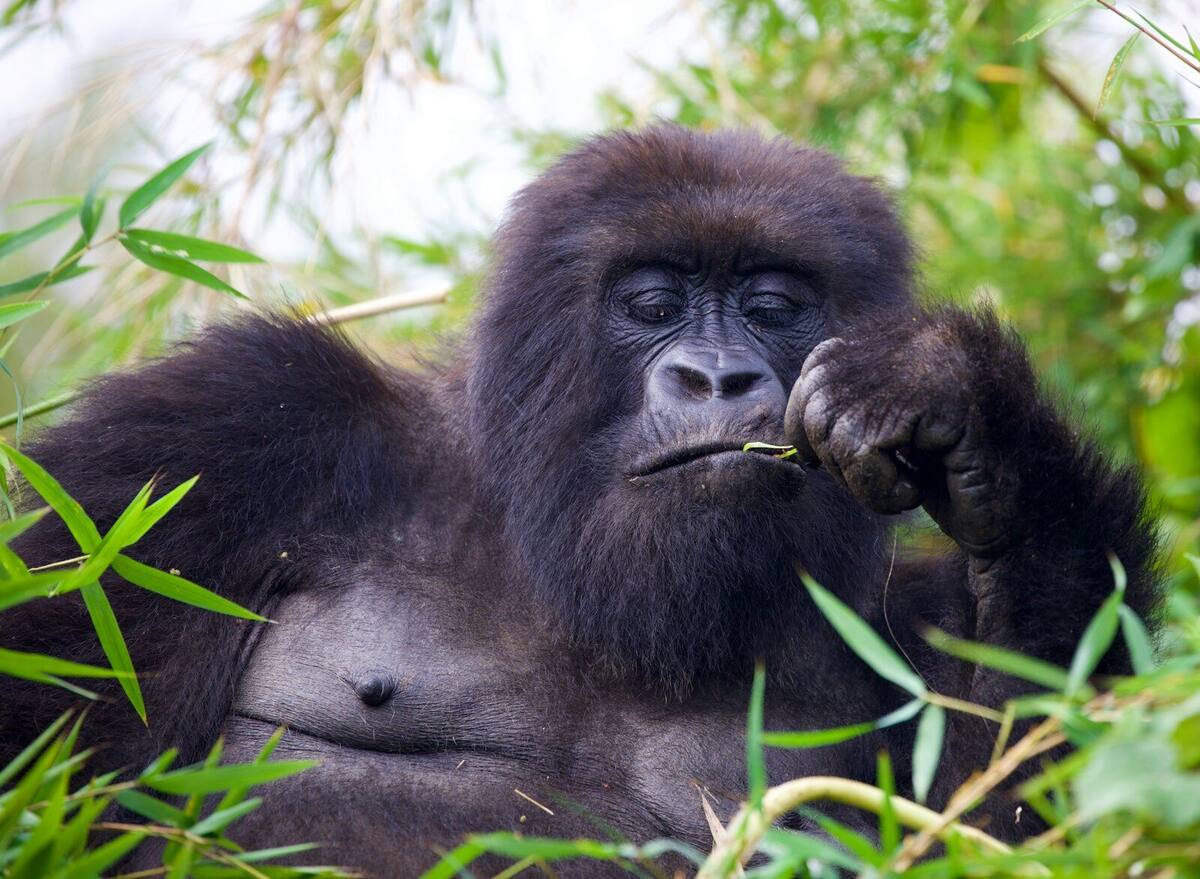
Volcanoes National Park has 12 habituated families open to standard trekking, each visited by a maximum of 8 people a day — 96 permits a day, nationwide, no more. Some, like Susa and Sabyinyo, have been studied and visited for decades and are among the park's best-known groups; others, like Amahoro and Kwitonda, are equally real, equally habituated, just less famous. RDB assigns you to a specific family the morning of your trek, based on where trackers find them and your stated fitness level — you don't choose in advance, and every family gives you the same one hour with wild mountain gorillas.
What Happens on Trek Day, Step by Step
4:30 AM — Kigali pickup. Your driver-guide collects you from your Kigali hotel for the roughly 2.5-hour drive north to Kinigi, headquarters of Volcanoes National Park.
7:00 AM — Briefing at Kinigi. All trekkers gather for a mandatory RDB briefing: safety rules, trekking etiquette, and family assignments. This is also where porters (optional, around $15) can be hired — genuinely useful on steeper terrain.
Mid-morning — The trek. You set off with your assigned ranger and a team of trackers who've typically already located the gorilla family's general area that morning. Trek duration is genuinely unpredictable: anywhere from 30 minutes to several hours of walking through bamboo forest and volcanic terrain, depending on how far the family has moved.
The gorilla hour. Once located, you leave backpacks and walking sticks behind and approach to a respectful distance — exactly one hour with silverbacks, mothers, and playful juveniles going about an ordinary day in the forest.
Afternoon — Return and drive back. You trek back to the trailhead, receive an official certificate, and drive back to Kigali, typically arriving early-to-mid evening depending on how long the trek ran.
How Fit Do You Need to Be?
This is the most honest answer we can give: it depends entirely on which family you're assigned, which is decided the morning of based on where trackers find them. Some treks are a 30-45 minute walk on relatively gentle terrain; others involve several hours of steep, muddy, high-altitude hiking through dense vegetation. RDB does take your stated fitness level into account when assigning families — moderate day-hiking fitness is enough for most assignments, but be honest about your actual condition when booking, not optimistic, since that's what your assignment is based on.
Booking Your Permit — The Real Process
RDB doesn't sell permits directly to individual travelers — a registered operator has to book on your behalf. Here's what that actually looks like: you pay a deposit, we reserve your date and request the permit from RDB, and confirmation typically comes back within about 24 hours. That sequence — deposit first, confirmation after — is normal everywhere, not a red flag. The actual warning signs of a scam are different: an operator who can't clearly explain their RDB certification before you pay, or whose confirmation never arrives at all. Book 3-6 months ahead for peak season (June-September, December-February); shoulder season (March-May, October-November) can usually be arranged 4-8 weeks out.
Best Time of Year to Go
Gorilla trekking runs year-round — the gorillas don't migrate, and the park doesn't close. The two dry seasons, June-September and December-February, have firmer, less muddy trails and are the busiest booking windows. The rainy seasons, March-May and October-November, see fewer tourists and are easier to book on shorter notice, at the cost of genuinely slippery, harder-going trails.
What to Pack
Long trousers and long sleeves (protection from stinging nettles, not just weather), sturdy waterproof hiking boots, a rain jacket regardless of season, gardening-style gloves for pushing through vegetation on steep sections, a daypack, at least 2 liters of water, and a camera without flash — flash photography near gorillas is not permitted. Porter hire (~$15) is optional but genuinely worth it on harder treks.
Trekking Rules and Etiquette
A minimum 7-meter distance from the gorillas at all times, no flash photography, no eating or drinking in their presence, and if you're feeling unwell — even a mild cold — tell your guide before the trek starts; gorillas can contract human respiratory illnesses, and RDB will reassign or postpone your trek rather than risk the family's health. Minimum age is 15, strictly enforced at Kinigi.
Combine Your Trek with Other Volcanoes National Park Activities
Many travelers extend their day or trip with activities in the same park. Golden monkey tracking runs in the same forest for an additional RDB permit (~$100) and pairs naturally with a gorilla trek. The Mount Bisoke volcano hike, a crater-lake summit trek through the same Virunga range, is a genuinely different kind of day for travelers staying longer in the area.
Where Your Permit Fee Actually Goes
The $1,500 RDB permit funds Rwanda's conservation program directly — ranger salaries, veterinary monitoring, anti-poaching patrols, and revenue-sharing with communities bordering the park. It's a large part of why the mountain gorilla population has recovered from around 620 individuals in 2008 to over 1,000 today, one of the only great ape populations in the world that's genuinely growing rather than declining.
Rwanda vs. Uganda vs. DRC
Rwanda's permit costs $1,500 against Uganda's $800 and DRC's lower (but currently less stable) pricing. What the permit price doesn't tell you: Volcanoes National Park is 2.5 hours from Kigali's international airport, with genuinely good road infrastructure and lodging options; Uganda's Bwindi Impenetrable Forest requires a much longer transfer; DRC's Virunga National Park has had long stretches of closure due to regional security concerns. Rwanda's higher permit price buys convenience, safety, and consistency that the cheaper alternatives don't reliably match.
Other Ways to Trek Gorillas With Us
If the standard day-trip formats above don't fit what you're looking for, we also run: a gorilla habituation experience (4 hours instead of 1, with a family still being habituated, max 4 visitors a day), a luxury gorilla safari built around two private treks and two nights at One&Only Gorilla's Nest, and multi-day combinations like our 2-day gorilla and Kigali package and 3-day gorilla experience with golden monkeys included.
Not sure which option fits your trip? Tell us your group size, budget and dates — we'll recommend the right one and confirm real RDB permit availability before you commit to anything.
Tour Highlights
Choose your trek style: shared, private RAV4, or private Land Cruiser V8
1 hour with a wild mountain gorilla family
12 habituated families, 96 permits issued across Rwanda daily
RDB-certified tracker-guide on every trek
$1,500 gorilla permit and lunch included in every price
Certificate of trekking
What's Included
RDB gorilla trekking permit ($1,500 value)
Vehicle and driver-guide (shared or private, by package)
Professional tracker-guide
Park entrance fees
Lunch
Bottled water
Walking stick
Not Included
Accommodation (this is a day trip from Kigali)
International flights
Travel insurance
Gratuities (discretionary)
Personal items
Golden monkey tracking (available as an add-on, $100)
Limited Holiday Departures
Two fixed-date holiday specials for Dec 2026 & Jan 2027 — each departure window is limited to just 2 bookings.
7-Day Rwanda Highlights (Gorillas, Lakes & Kigali) 5-Day Lakes, Volcanoes & Tea EscapePrefer a ready-made itinerary instead of booking this tour alone? Browse all our Rwanda tour packages — fixed prices, full day-by-day plans, nothing to build from scratch.
You May Also Like
Primate Tours
Wildlife Safari
 Cultural Tour